

Key Highlights
• Engagement Meaning: Strong relationships that improve retention and reduce churn.
• Key Advantages: Better loyalty, higher satisfaction, more upsells, smoother cycles.
• Personal Touch: Tailored suggestions, custom offers, and unified customer views.
• Omni Presence: Unified messaging across all touchpoints and channels.
• Key Metrics: NPS, repeat rate, order value, frequency, and satisfaction.
What comes to mind when you hear 'an outstanding customer engagement strategy'? Is it the advanced tools and trends that leading e-commerce platforms implement these days?
It's essential to include the latest trends and technology in your customer engagement strategies. But will that alone help you improve the e-commerce conversions? The answer is no.
The true essence of converting customers is understanding them in-depth. For the same reason, your e-commerce customer engagement efforts should align with your customer behaviour and preferences. Is that your idea of engaging customers in e-commerce as well?
Then, discover the top 10 e-commerce engagement strategies that create mutually beneficial relationships for customers and e-commerce businesses.
How Does Customer Engagement Drive Conversions?
Customer engagement refers to building customer relationships that eventually lead to retaining them. An engaged customer will make repeated purchases from your e-commerce store. This makes them feel closer to your brand and builds loyalty and trust. Thus, customer engagement helps reduce customer churn and establishes lasting connections with them.
Why is customer engagement important? Here are some statistics showing how important customer retention will be for businesses.
- • Existing customers bring in half the annual revenue for 61 per cent of small business owners.
- • Current customers spend 67% more due to repurchases compared with new customers.
- • Almost 61 per cent of businesses also report that loyalty program members spend more than other customers.
Advantages of Enhancing Customer Engagement
Improving customer engagement holds several benefits for your business. Let's look at some of them.
Higher Customer Retention and Loyalty
When developing customer engagement strategies, it is essential to know how loyal customers feel about your product or service. This will help you identify areas for improvement in your product. For instance, you might have to improve your customer service, simplify the existing system, or reduce the complexity of user onboarding.
This will help you optimise your product to meet the new customer's needs and expectations. Therefore, you can enhance customer acquisition and retention, enabling business growth.
Improved Customer Satisfaction
Optimising your product to meet the customer expectations improves customer satisfaction. It is essential for e-commerce businesses to gather user feedback and act on it. When your customers see their input is valued, it improves customer satisfaction and interactions.
Creates Up-Sell Opportunities
By prioritising customer engagement, you can create upsell opportunities and offer customers personalisation in product recommendations. When your customers explore additional products and services recommended, the average order value increases, boosting sales.
Optimises Purchase Cycles
By implementing the right customer engagement strategy, you can organise your activities to retain customers. You can use AI technology to automate customer interactions and repetitive tasks. This, in turn, results in a streamlined purchase cycle in your e-commerce business.
10 E-commerce Customer Engagement Strategies
Let's explore ten strategies to engage customers and increase conversions in your e-commerce business.
Ten e-commerce Customer Engagement Strategies

Personalised
recommendations

Tailored offers and
recommendations

Customer loyalty
program

Collect customer
feedback

Utilise social media

Gamification

Simplify purchase
cycle

Responsive design

Abandoned cart &
drop-off campaigns

Omnichannel customer
engagement
1. Personalised Recommendations
E-commerce personalisation is widely considered a top priority. When it comes to e-commerce, offering personalised recommendations to customers is a strong customer engagement strategy. Personalising customer journeys also improves conversion rates and sales in e-commerce platforms.
More than 50% of B2B e-commerce companies use generative AI to optimise user engagement online. With AI innovations, e-commerce businesses can ensure personalisation based on customer data.
2. Incentivize Users With Tailored Offers And Discounts
Offers and discounts have constantly improved conversions and engagement for businesses. However, almost all e-commerce platforms offer discounts now, making them less attractive to customers. So, how can you stand out in the competition?
Offer personalisation in your offers and discounts. If you have a unified view of a customer, you can personalise offers based on their behaviour and preferences. These engagement strategies increase customer engagement and customer acquisition.
3. Customer Loyalty Program
Nearly 90 per cent of businesses that run loyalty programs say that the program members spend more money than others. Therefore, implementing a customer loyalty program will benefit e-commerce customer engagement strategies.
How do businesses benefit from loyalty programs?
 60%
60%60% of customers will tell friends and family about a brand they’re loyal to
 52.3%
52.3%52.3% customers will join a loyalty or VIP program
 39.4%
39.4%39.4% of customers will spend more on a product even if there are cheaper options available elsewhere
Let's take a look at Starbucks's rewards program. The program members earn loyalty points for each purchase and redeem them for free food and merchandise. The loyalty points they earn encourage consumers to make repeat purchases. The loyalty program empowers Starbucks to retain its customer base efficiently.
You can also assign different tiers based on the engagement level of the loyalty program member. Customers can move up the tiers to higher levels by earning loyalty points. It's essential for e-commerce businesses to ensure that the higher levels have better offers and discounts.
This motivates potential consumers to sign up, engage more, and purchase products for a better loyalty tier.
4. Gather Customer Feedback
All e-commerce businesses must gather qualitative feedback. They can employ post-purchase and customer satisfaction surveys to learn how loyal customers feel about their product or service. This gives them the right insights into areas where improvement is necessary.
It is also important that you act upon and resolve these issues to value your customers effort and time spent giving valuable feedback. If you feel your customers are not interested in completing the customer surveys, you can reward them for participating.
This helps you improve the e-commerce user experience, enabling new customers to sign up without hesitation.
5. Utilize Social Media
Social media is the most significant tool for attracting and retaining customers. It also engages new customers. Above all, it can be used to boost brand awareness and maximise sales.
You can efficiently utilise your presence through social media only if you are creating engaging content to attract followers interested in your e-commerce business. You can leverage app features to introduce your products to your customers and connect with them in real-time.
Social media advertising is a cost-effective method of reaching your target audiences. It lets you reach specific customer segments with the right content and offers.
6. Gamify Customer Experience
Gamification is another essential customer retention strategy in e-commerce platforms. You can use it in your loyalty programs to offer your customers points, badges and rewards. It also improves user referral through social media integration.
By implementing progress bars and countdown timers in onboarding, you can encourage new customers to complete the process. Therefore, gamification in e-commerce helps you convert your customers and encourage deeper engagement.
7. Simplify the Purchase Cycle
How simple is your purchase journey? If it's lengthy and without easy payment options, your customers will unlikely complete the purchase.
It is essential for any commerce business to consider a customer's purchase cycle seriously. You should make things simple, from product discovery and searching for products to the check-out process. If you have a simple and streamlined purchase cycle, your customers will stay engaged and complete the purchase.
When potential users are satisfied with guest purchase checkout, they might sign up to become regular customers. At the same time, a complex process might cost you those customers.
8. Responsive Design and Reduced Load Time
Is your e-commerce site's browsing experience consistent across all screens? A responsive design can help you convert more users and engage them.
e-commerce websites that load within a second convert 2.5 times more customers than similar websites that load in 5 seconds. That is why it's essential for you to have a reduced load time to engage users and convert them.
9. Abandoned Cart Campaigns And Drop-Off Campaigns
Surprisingly, the average shopping cart abandonment rate is 70.19 per cent. Most customers abandon their carts as they save items for later or explore gift options. At the same time, the high abandonment rate might still be caused by issues that need to be fixed.
It might be because of a complex checkout process or less customer trust. However, you can start an abandonment campaign to re-engage these customers.
Similarly, a drop-off campaign can help re-engage potential customers who abandon the purchase process. You can bring them back through personalised reminders and offers that address their concerns.
10. Omnichannel Customer Engagement
Omnichannel engagement simply means delivering unified interactions and messaging to your customers on different communication channels and touchpoints. Nowadays, people expect information that is easily accessible within clicks, and omnichannel customer engagement is a form of marketing that ensures one is within the reach of the customer.
Offering multichannel engagement requires careful planning and organisation. It might also demand technology and proper staff training. It is also essential to create a consistent experience across every customer touchpoint.
Deliver Seamless Omnichannel Customer Engagement Across All Channels And Touchpoints With Techmonk
How to Measure Customer Engagement?
Do you know that measuring customer engagement is crucial for understanding your success? You can only convert new users if your existing users are happy.
Let's explore some key customer engagement metrics to track.
1. Net Promoter Score (NPS)
Net promoter score measures how much your customers feel your product is worth referring to a friend. It also tells you about customer satisfaction and loyalty.
How to Improve NPS in e-commerce?
- • Ensure that your customer service is top-notch to improve customer satisfaction.
- • Gather customer feedback from engaged customers and act on it to make customers feel valued.
- • Improve the customer life cycle to create an emotional connection with your users.
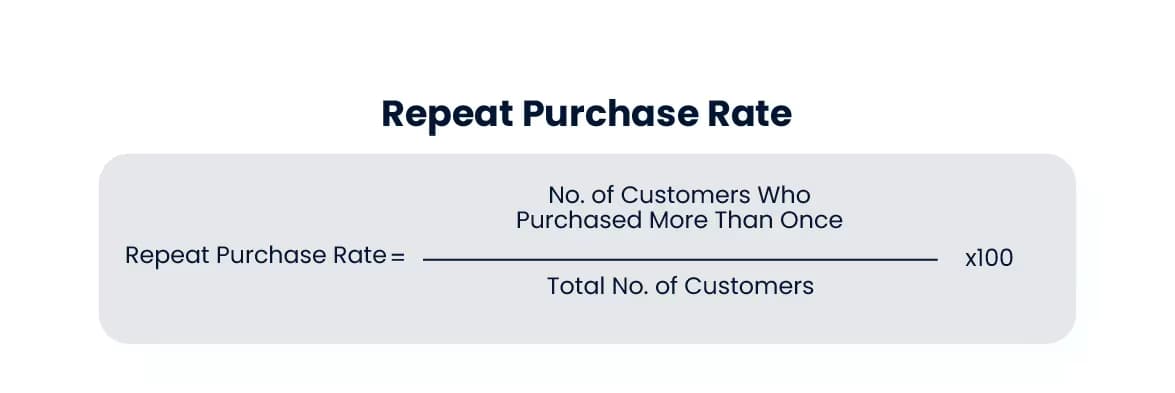
2. Repeat Purchase Rate
The repeat purchase rate measures how often customers make repeat purchases. With more repeat customers, you can build brand loyalty and improve customer satisfaction. Proper customer engagement efforts can improve the repeat purchase rate.
How to Improve Repeat Purchase Rate in E-commerce?
- • Implement a consumer loyalty program to encourage repeat purchases.
- • Analyse customers past purchases to offer personalised recommendations.
- • Provide post-purchase support to engaged customers to keep them happy.
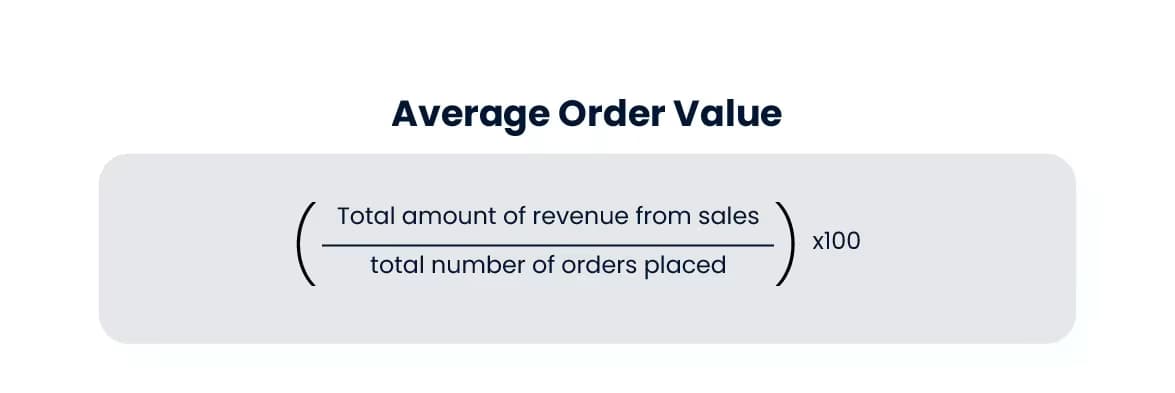
3. Average Order Value (AOV)
The average order value is the average amount a customer spends per order. It shows why it is important to identify each customer's spending patterns and revenue potential. It is one of the important customer engagement metrics for an E-Commerce business.
By improving AOV, you can improve sales without spending on customer acquisition costs.
How to Improve AOV in e-commerce?
- • Recommend complementary products as cross-sell and upsell based on customer preferences.
- • Offer free shipping on orders about a certain amount.
- • Provide product bundles based on customer preferences for larger purchases.
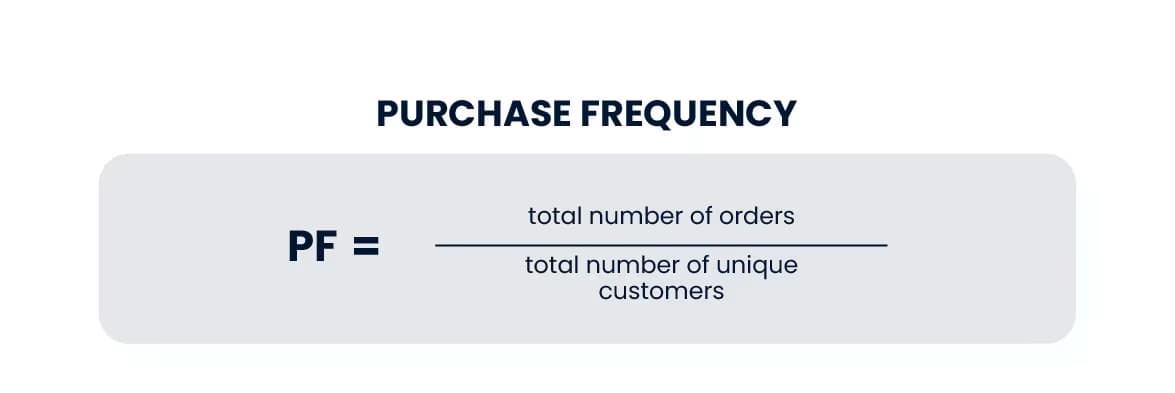
4. Purchase Frequency Of Customers
Purchase frequency is a measure of how often a customer buys from your store within a specific period. You can improve purchase frequency through successful customer engagement. A higher purchase frequency denotes that your customers consistently choose your brand.
How to Improve Purchase Frequency in e-commerce?
- • Encourage repeat purchases through personalised email reminders.
- • Provide subscription services for products that customers purchase regularly.
- • Create urgency through limited-time discounts to enhance engagement.
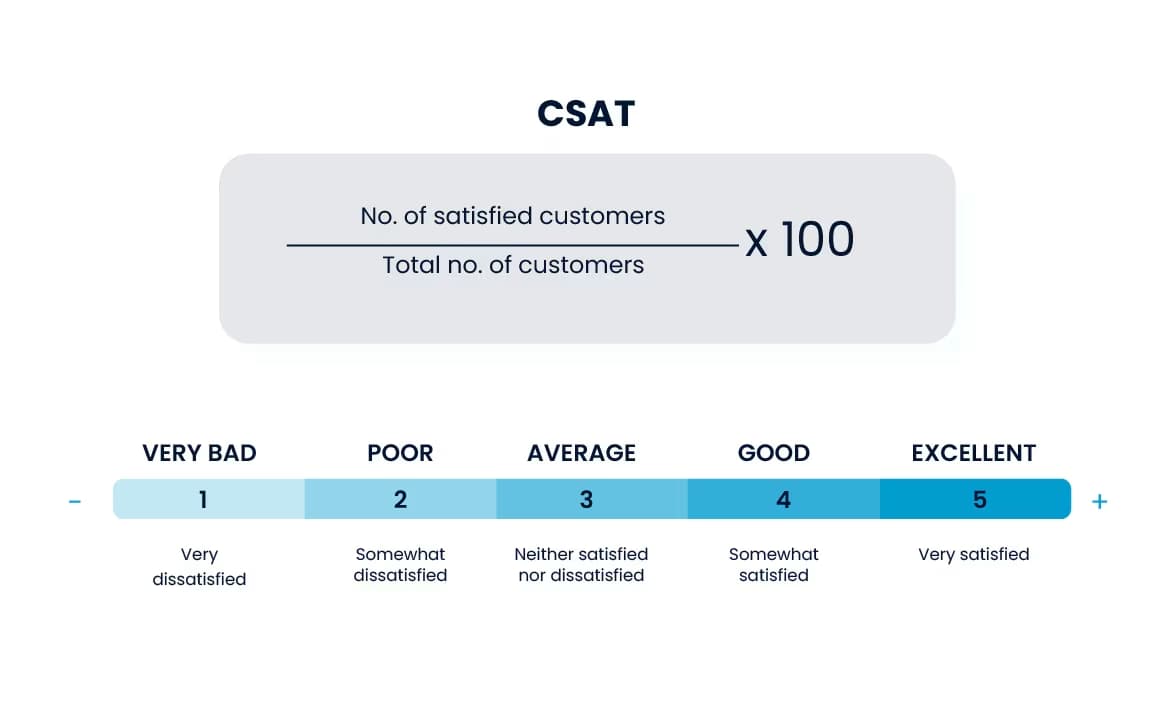
5. Customer Satisfaction Score (CSAT)
This score measures how satisfied customers are with your product or service. A high score suggests that customers are happy with your product.
How to Improve CSAT in e-commerce?
- • Make your product user-friendly and simplify the purchase process.
- • Provide adequate customer support to resolve their issues quickly.
- • Update your product offerings regularly to meet customer expectations.
TechMonk: AI Agent-Powered Customer Engagement Revolution
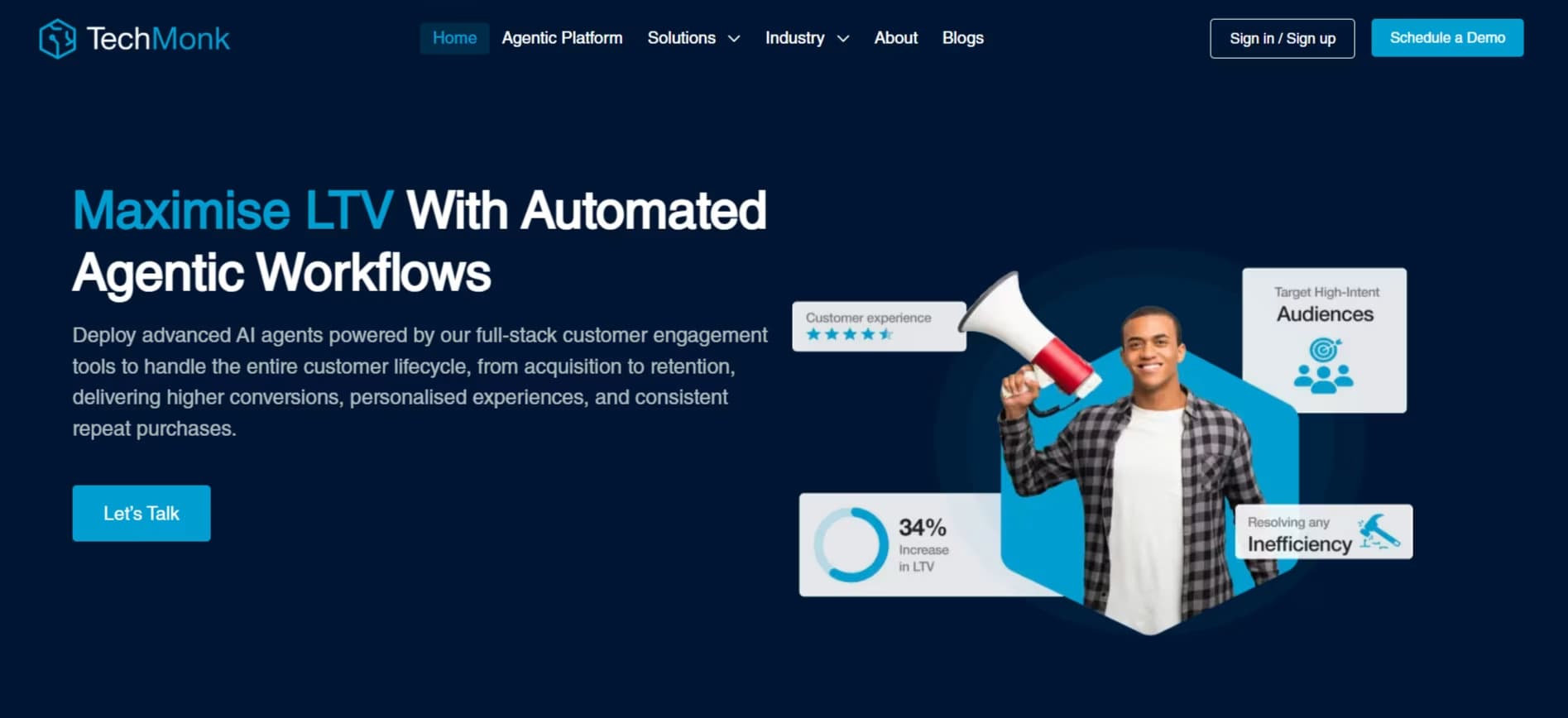
If you want to automate tasks without building multiple AI agents, TechMonk supports you with pre-built AI agents. These agents plug into your workflows with ease and take care of repetitive tasks.
This saves your team time and helps you move faster. Why start from scratch when you can begin with ready agents that work right away and start delivering results?
- AI Sales Agents : Maximise customer engagement by guiding customers from interest to conversion. These agents study preferences and offer personalised recommendations across the channels your customers prefer. They also enhance product discovery and help customers make quicker decisions with clear suggestions and detailed comparisons.
- AI Customer Service Agents : Boost customer loyalty through self-service support. These agents stay available at all times and resolve queries instantly across channels like WhatsApp and SMS. They improve first response time and address customer needs with precision.
- AI Reporting Agents :Simplify your reporting workflow with AI agents that generate and manage dashboards and reports. They sync data in real time from different sources and present clear analysis in both tabular and graphical formats.
- AI Voice Agents :Transform customer service with natural and human-like voice agents that handle calls across PSTN and WhatsApp. These agents offer multiple voices and personalities. They stay active at all times and engage customers with clear conversations and steady follow-ups.
How to Build an AI Agent for Your Unique Needs?
Do you have unique workflows you want to automate? Then build your own AI agent in three simple steps and let it handle your tasks with ease. This gives you full control and keeps your operations smooth.
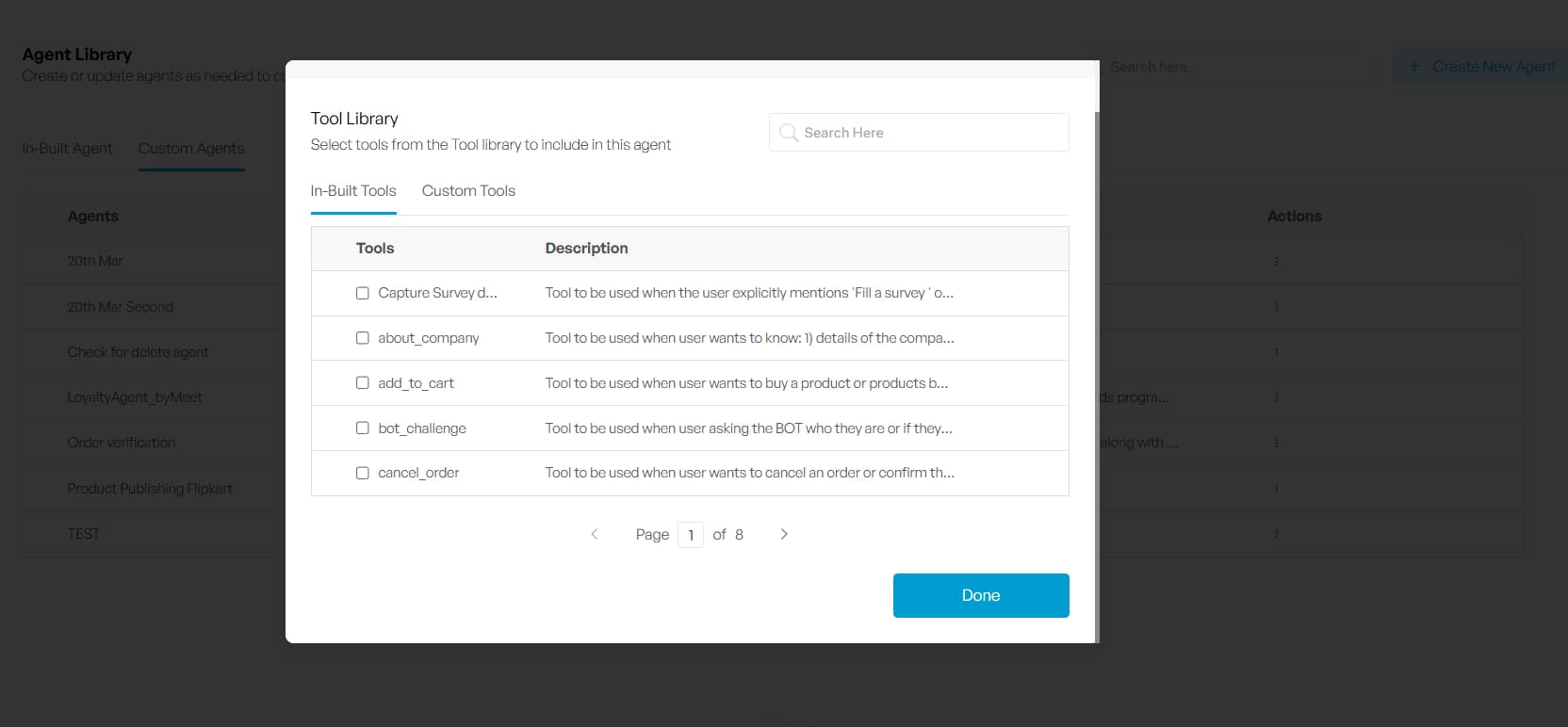
- Tools Library : Start by building the right tools from the collection of pre-built tools in TechMonk’s Tool Library. These tools give your AI agents the features they need to work smart and stay efficient. They help your agents handle most tasks across the customer journey. You only need to create new tools when you want your AI agent to perform something unique.
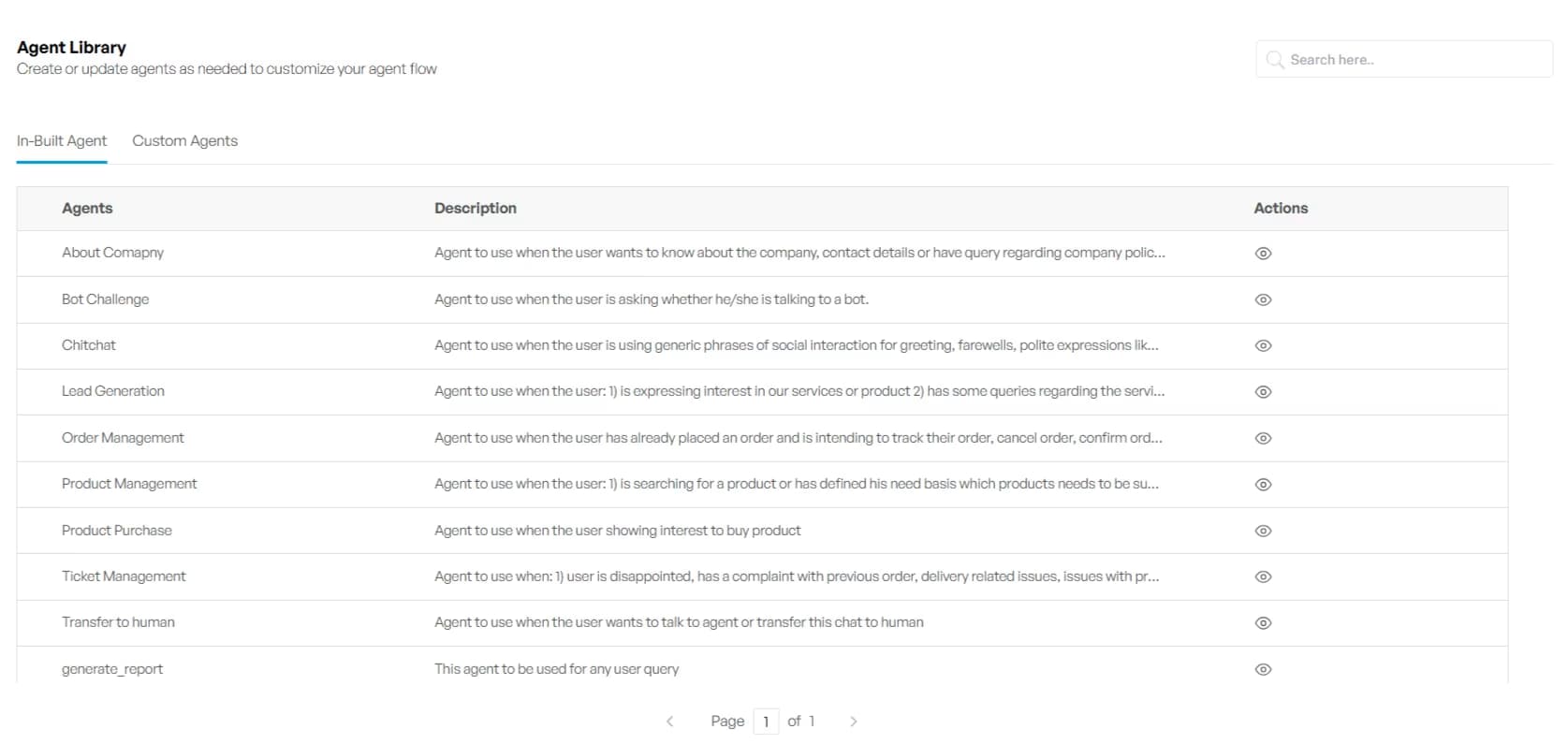
- Agents Library : Explore the Agent Library. It offers ready-to-use AI agents that support different tasks and make your workflows smoother and faster. You might look for an agent that fits your exact needs and wonder what to do when you do not find one. You can easily create a new agent yourself and shape it to your requirements.
- Agent Flow :Once you set your agents, you can connect them together. This is where you design an Agent Flow. It links multiple AI agents and helps them manage complete customer journeys. Think of it as a coordinated system where every agent knows its role. The orchestrator acts like the brain and decides which agent handles each task. This keeps the entire process clear and well-structured.
How to Ensure Custom AI Agents Perform Exactly the Way You Want?
You might wonder how much control you get over your AI agent. With TechMonk’s Agent Builder, you shape your AI agents exactly the way you want. It helps you fine-tune every detail and keep the experience consistent.
- Strict Guardrails : Set clear input and output guardrails. These guardrails accept only valid inputs and keep responses accurate. They also stop misuse and prevent hacking. They help you maintain strong quality control.
- Testing Automation :Train and test your AI agents anytime with an LLM Judge. This gives you confidence that customers always get accurate and relevant answers. It also helps you refine your agents as new needs appear.
- Observability of Workflows : Watch your AI agents work inside your workflows in real time. You see how they handle queries and how each response will be made. This helps you spot issues and improve how your agents interact with customers.
- Traceability of Conversations :Track AI agent conversations across different channels. You see how they form responses and why they choose certain answers. This also helps you find areas that need quick improvement.
- Tracking AI Agent Performance :Measure your AI agent’s performance by checking reasoning, response time, and latency. These insights help you improve efficiency and make your agents perform better over time. You also stay aware of how your agents respond under different situations.
Want to Build Your Own AI-Powered Virtual Agent In Just 3 Steps?
Full Stack Marketing Platform That Makes TechMonk’s Virtual AI Agent Outstanding
TechMonk runs its AI-powered virtual agent on a full-stack engagement platform. You get strong tools that support sales, support, and marketing from one place. This keeps your work simple and helps you move faster.
Final Thoughts
Strong customer engagement in e-commerce comes from knowing what your users need and acting on it. You can improve e-commerce engagement when you build journeys that feel personal and consistent across every touchpoint.
If you want to increase e-commerce engagement, focus on real behaviour, clear value, and simple experiences. When you use the right customer engagement strategies for e-commerce teams, you get better retention, stronger loyalty, and higher conversions. This is how you build lasting e-commerce user engagement that grows with your business.
We have even more exciting features that perfectly fit the e-commerce environment. Want to learn more? Book a demo and talk to us.
Powerful e-commerce Customer Engagement Solutions That Ensure Maximum Conversions And Customer Retention
FAQs
What is an example of customer engagement?

What are the 4 P's of customer engagement?
How to engage customers in conversation?
What is customer engagement in marketing?